Every Fast Team Is Building a Different Software Factory
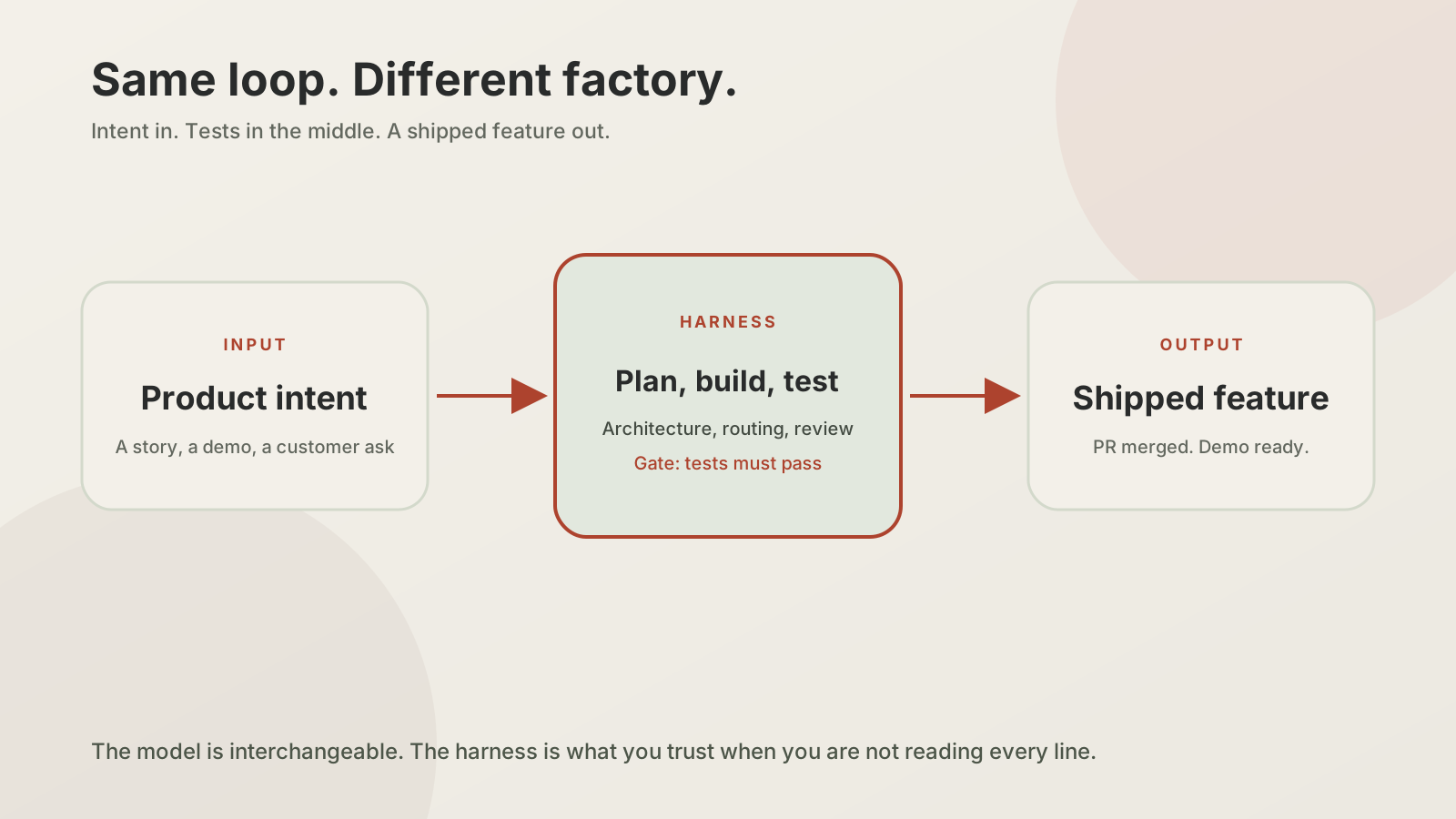
Resourceful founders and enterprises are inventing the same story-to-ship loop under different names, each shaping it around their customers, strengths, and ambitions.
Writing
Practical essays on enterprise AI, product experience, and the engineering decisions behind useful software.
21 essays, from architecture and verification to the way teams build.
Resourceful founders and enterprises are inventing the same story-to-ship loop under different names, each shaping it around their customers, strengths, and ambitions.
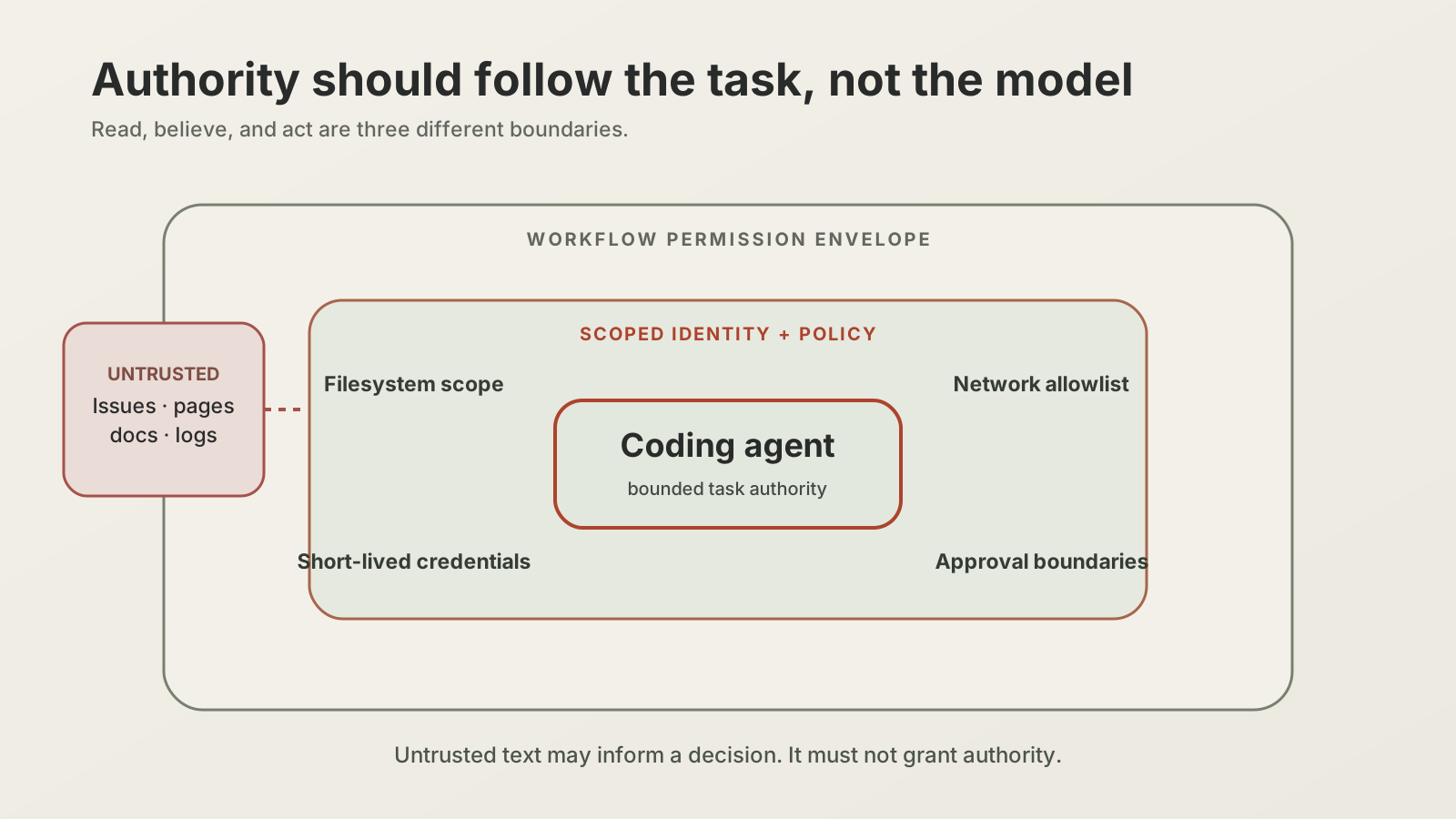
Secure agent systems constrain blast radius with scoped identities, narrow tools, data boundaries, meaningful approvals, and a tested way to revoke access.
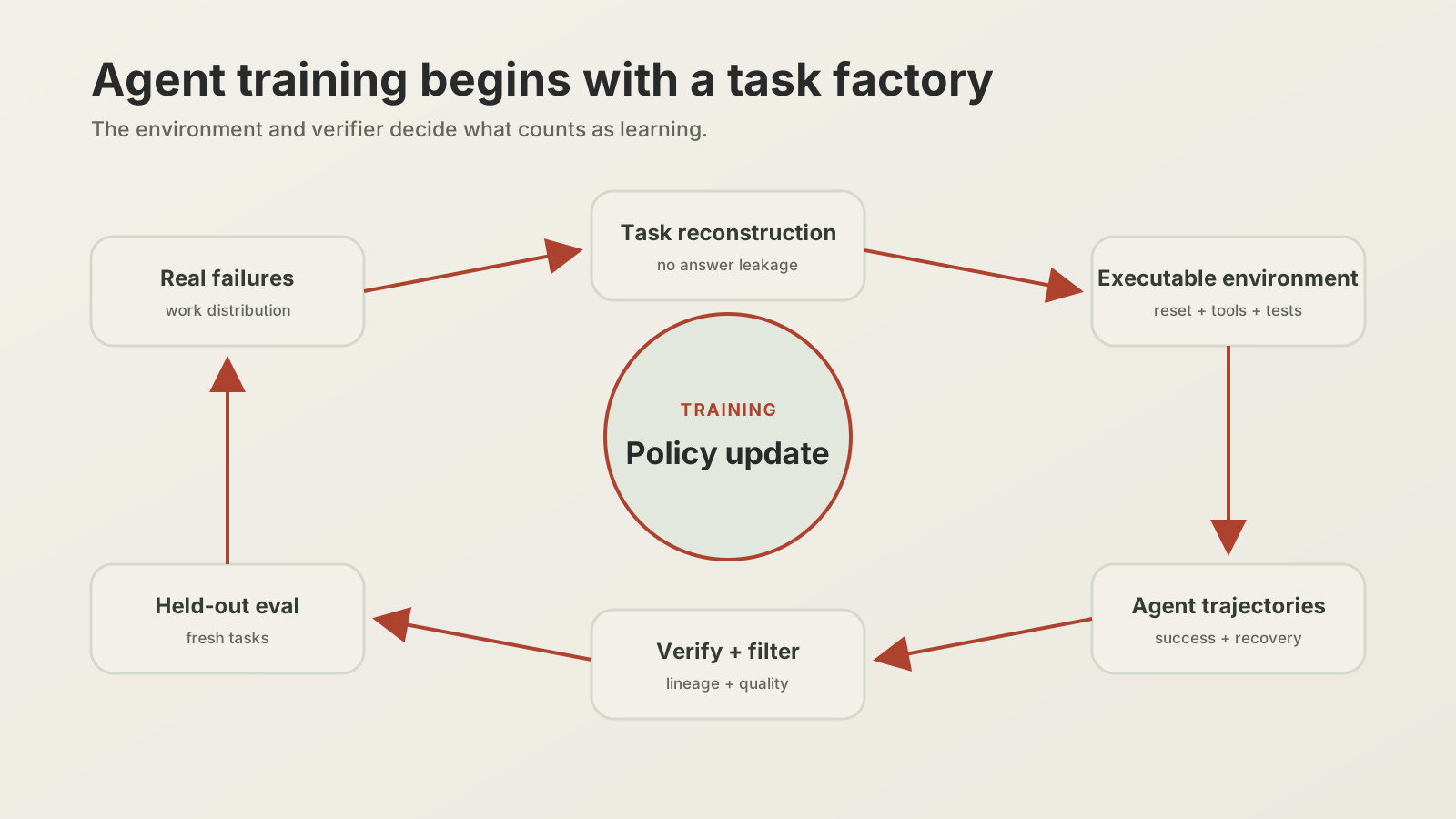
Agent training depends on realistic tasks, executable environments, reliable verifiers, curated trajectories, and held-out evaluations—not only an optimizer.
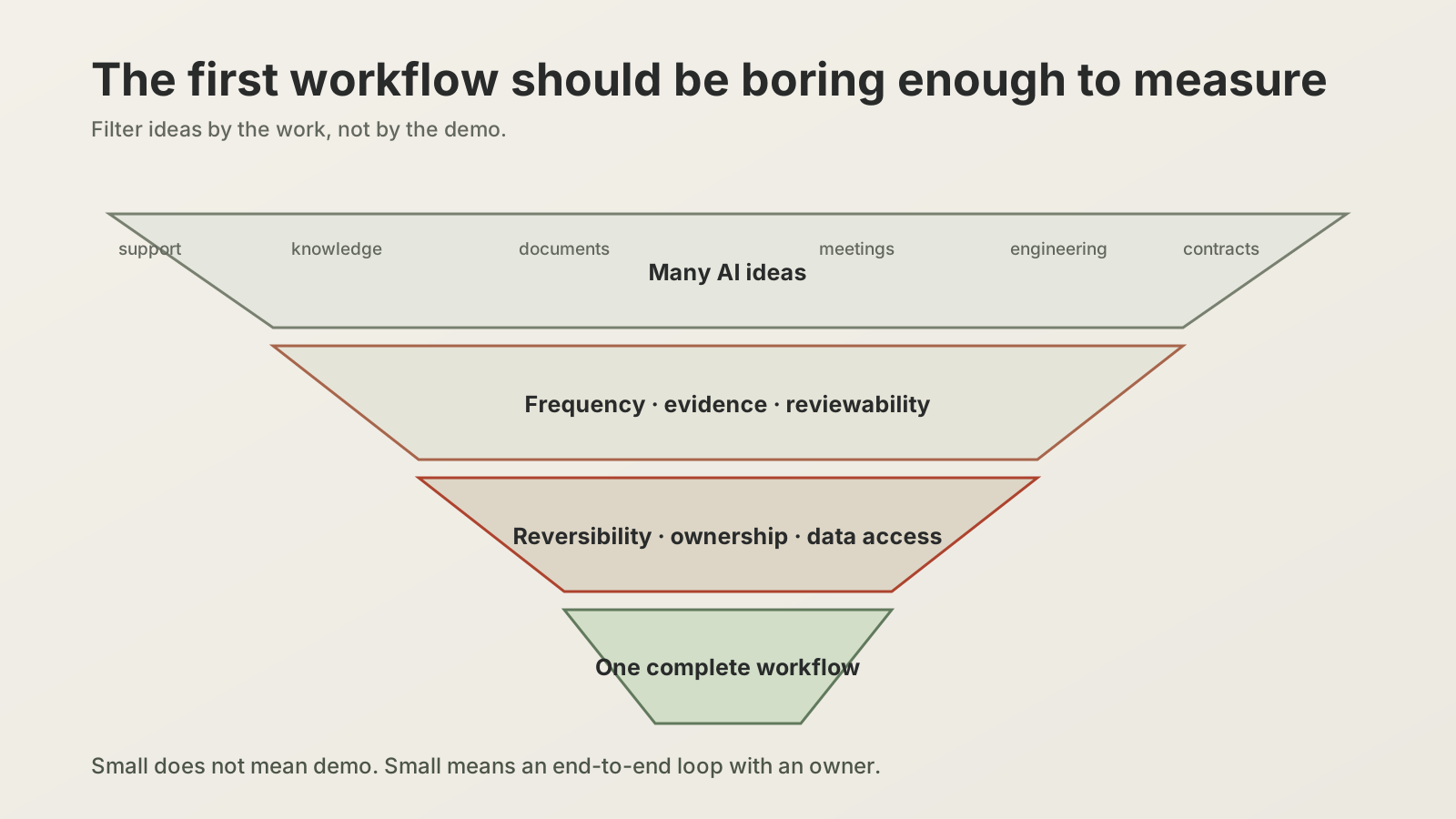
Choose a frequent, bounded, reviewable workflow, integrate only the systems it needs, and build a harness for that deployment.
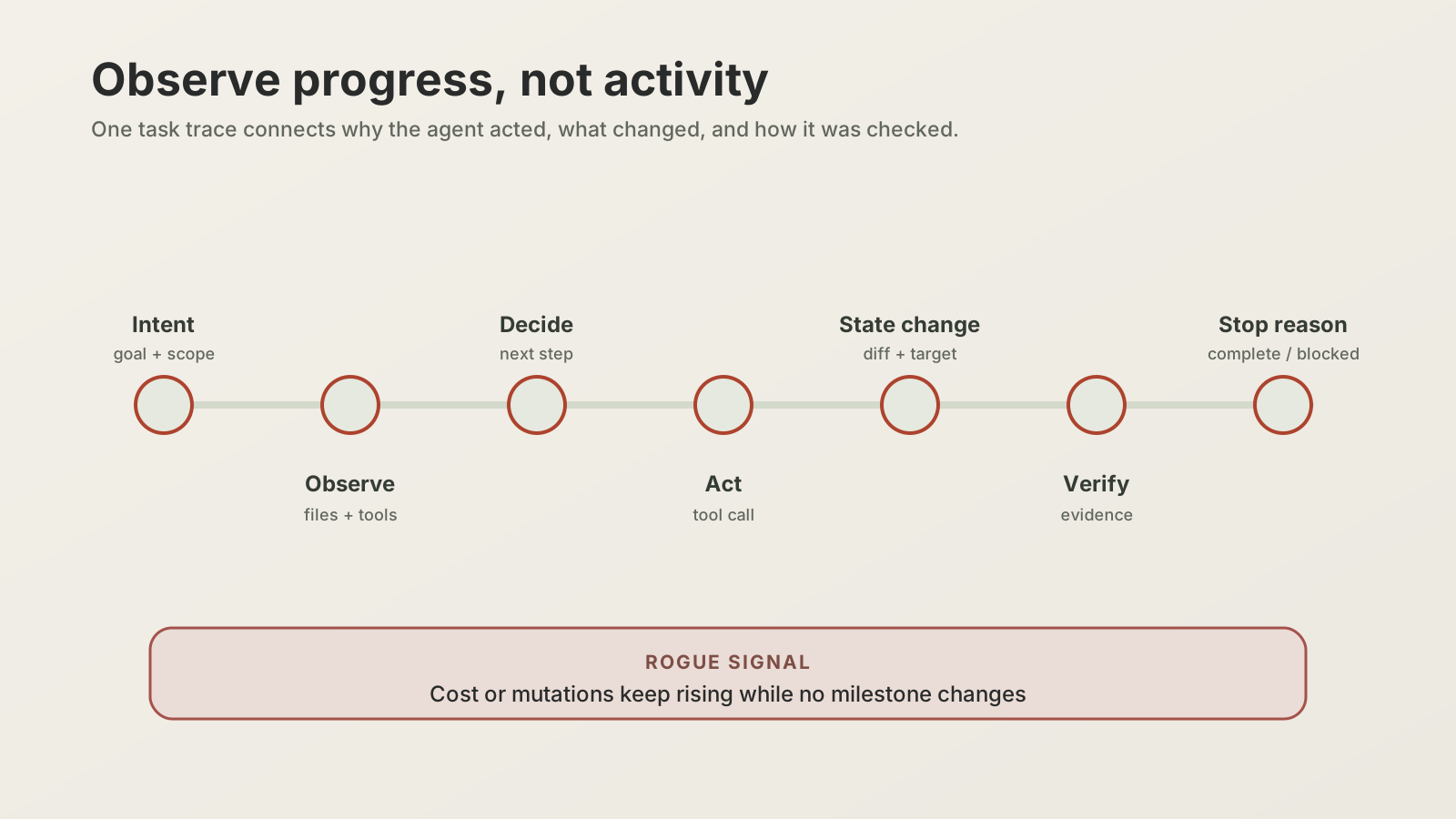
Agent observability should connect intent, tool calls, state changes, verification, cost, and policy into one trace an operator can actually debug.
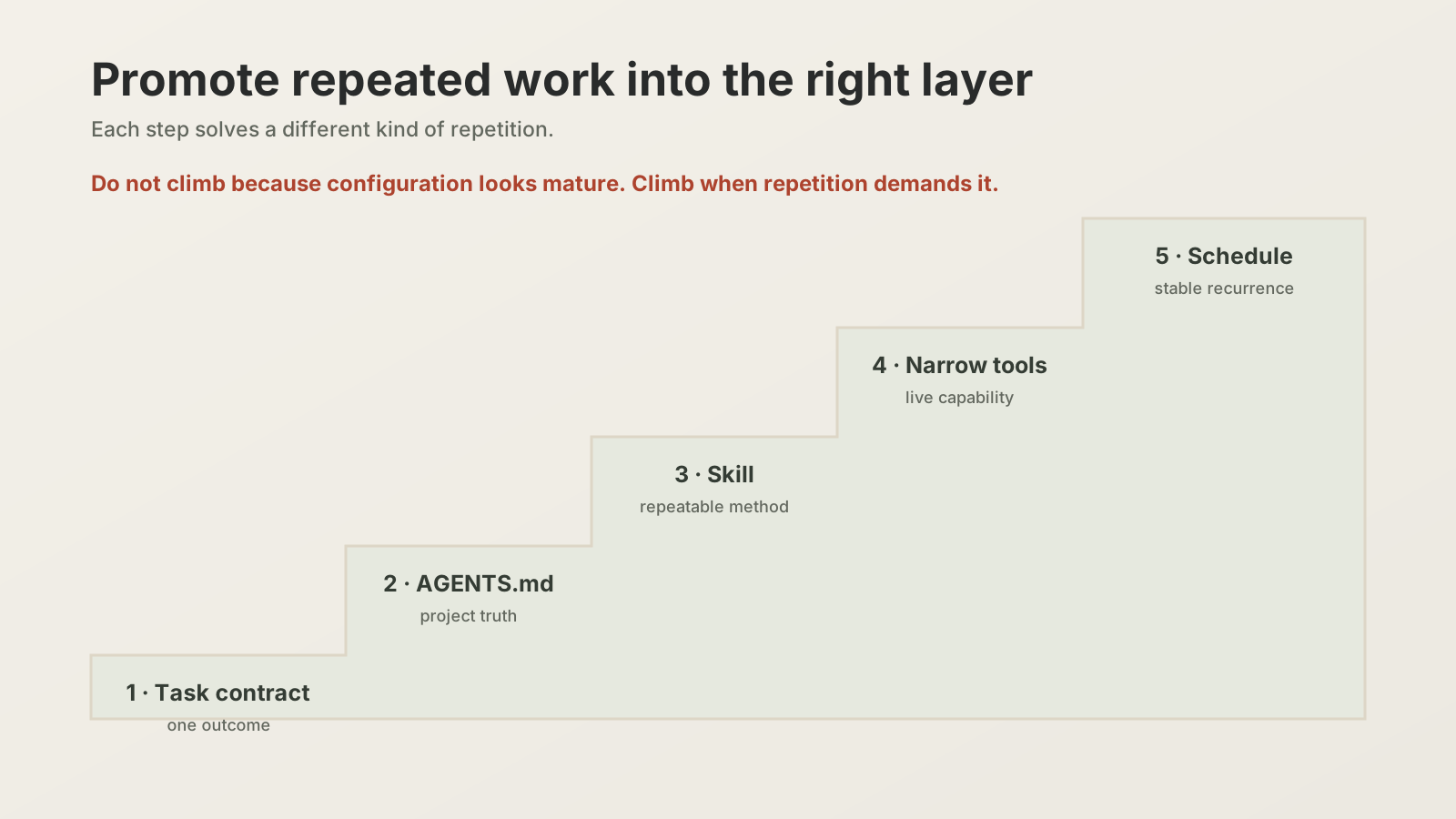
Turn successful Codex work into durable repository guidance, reusable skills, narrow tools, visible artifacts, and verified automations.
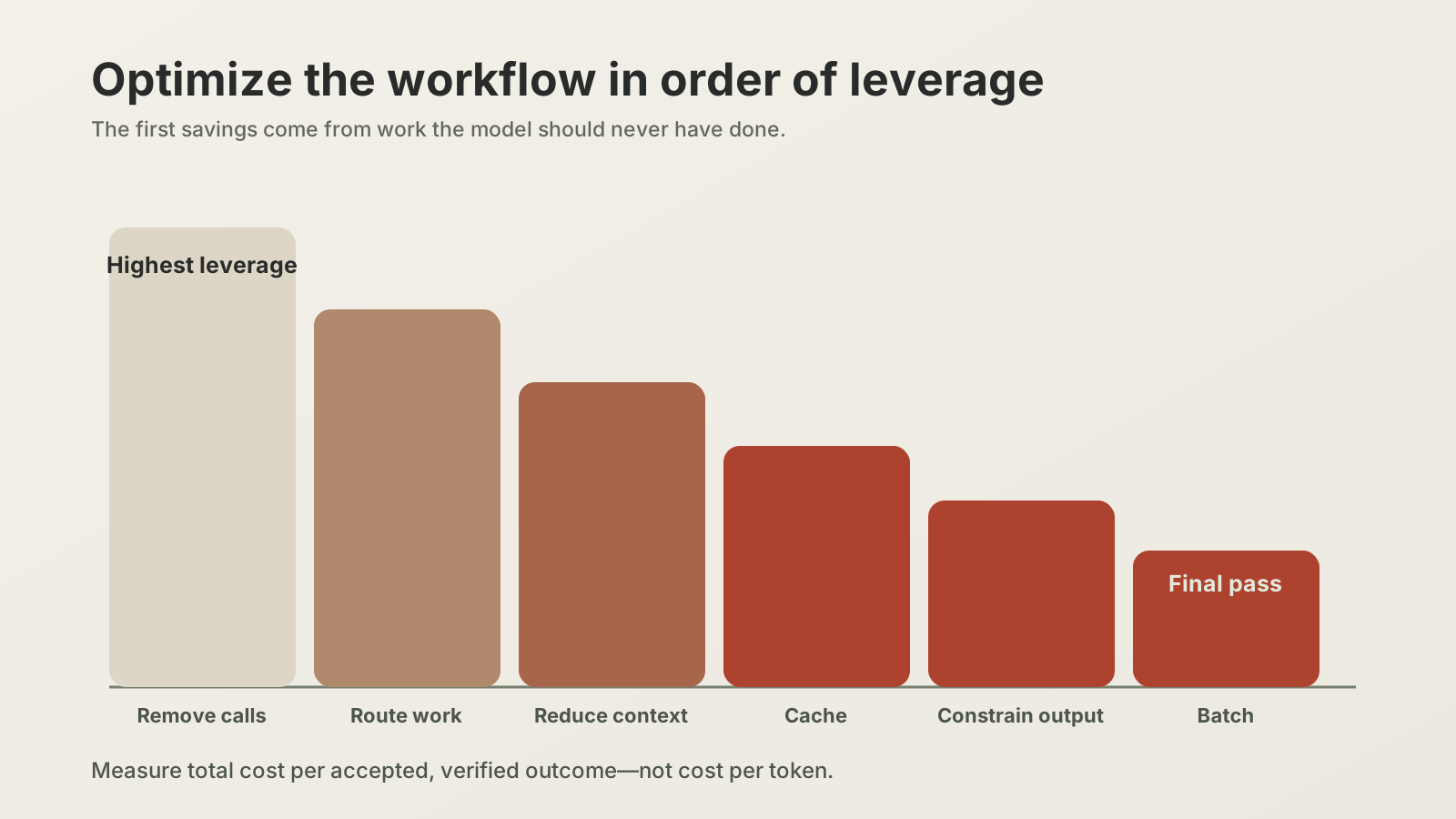
Reduce inference cost in the order that protects product quality: remove calls, route work, shrink context, cache, batch, and then tune.
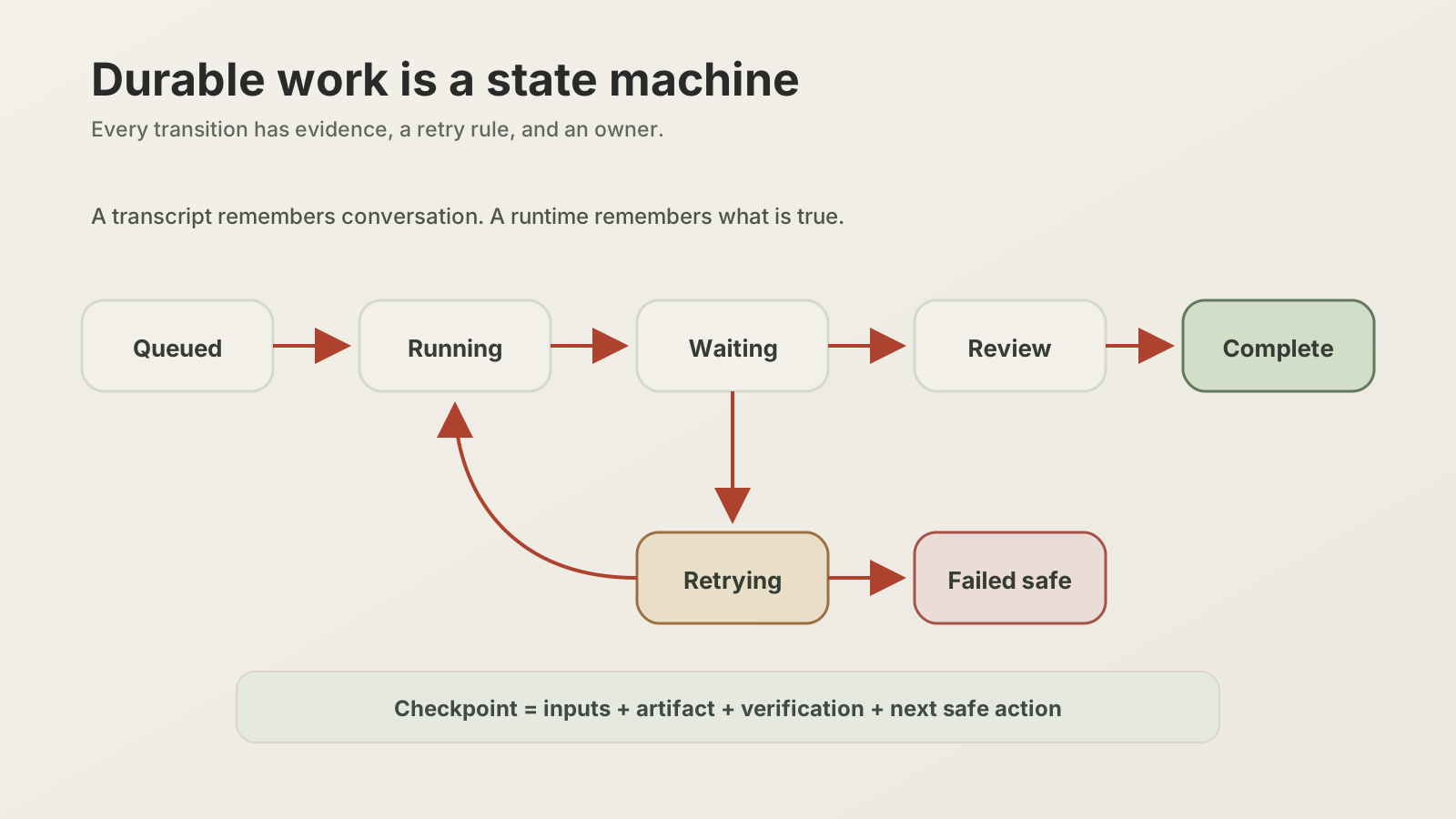
How to design Codex work that can run unattended, recover safely, and return evidence instead of an unfinished transcript.
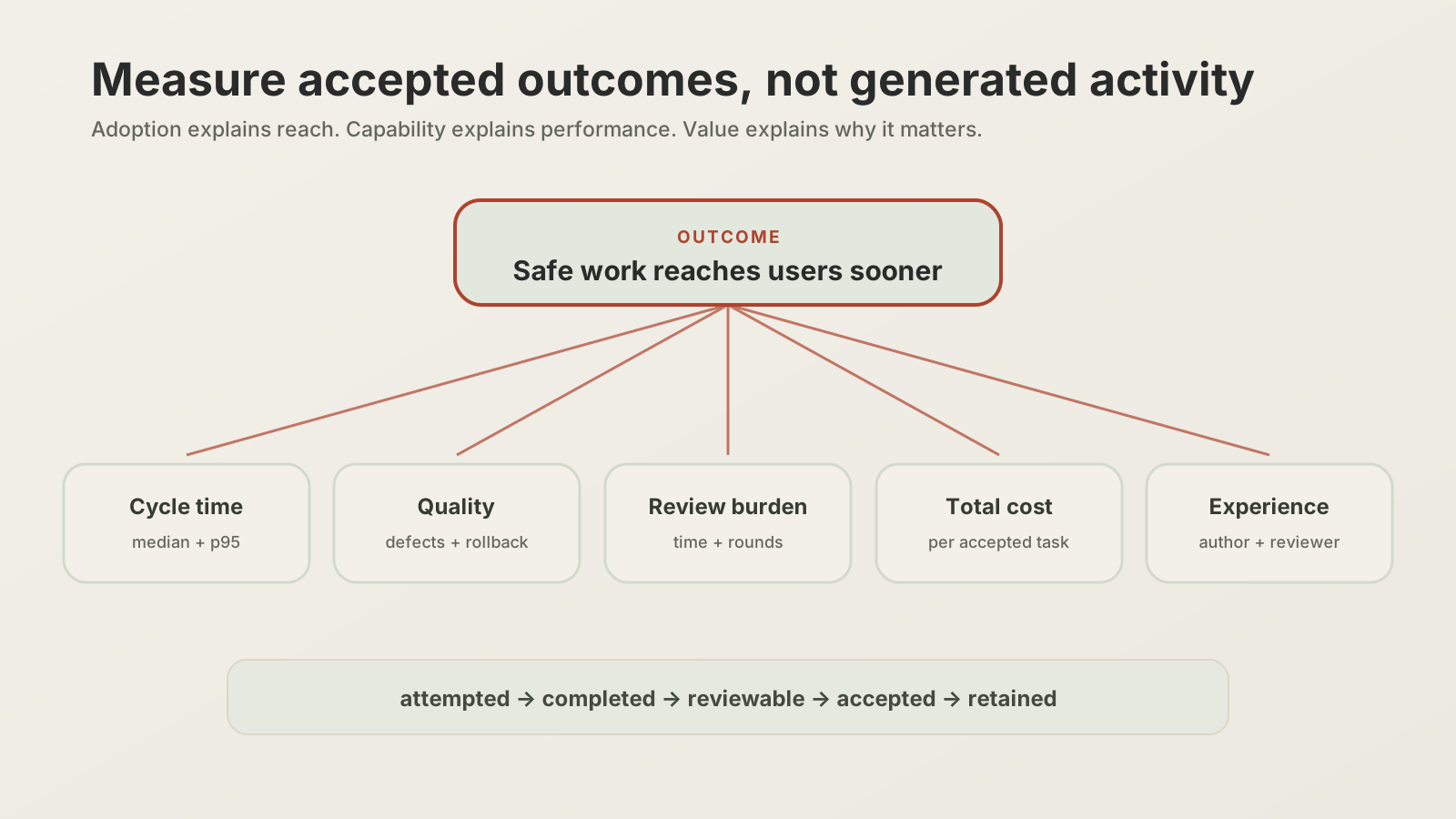
Measure accepted outcomes, cycle time, quality, review burden, and total cost together instead of mistaking usage or code volume for value.
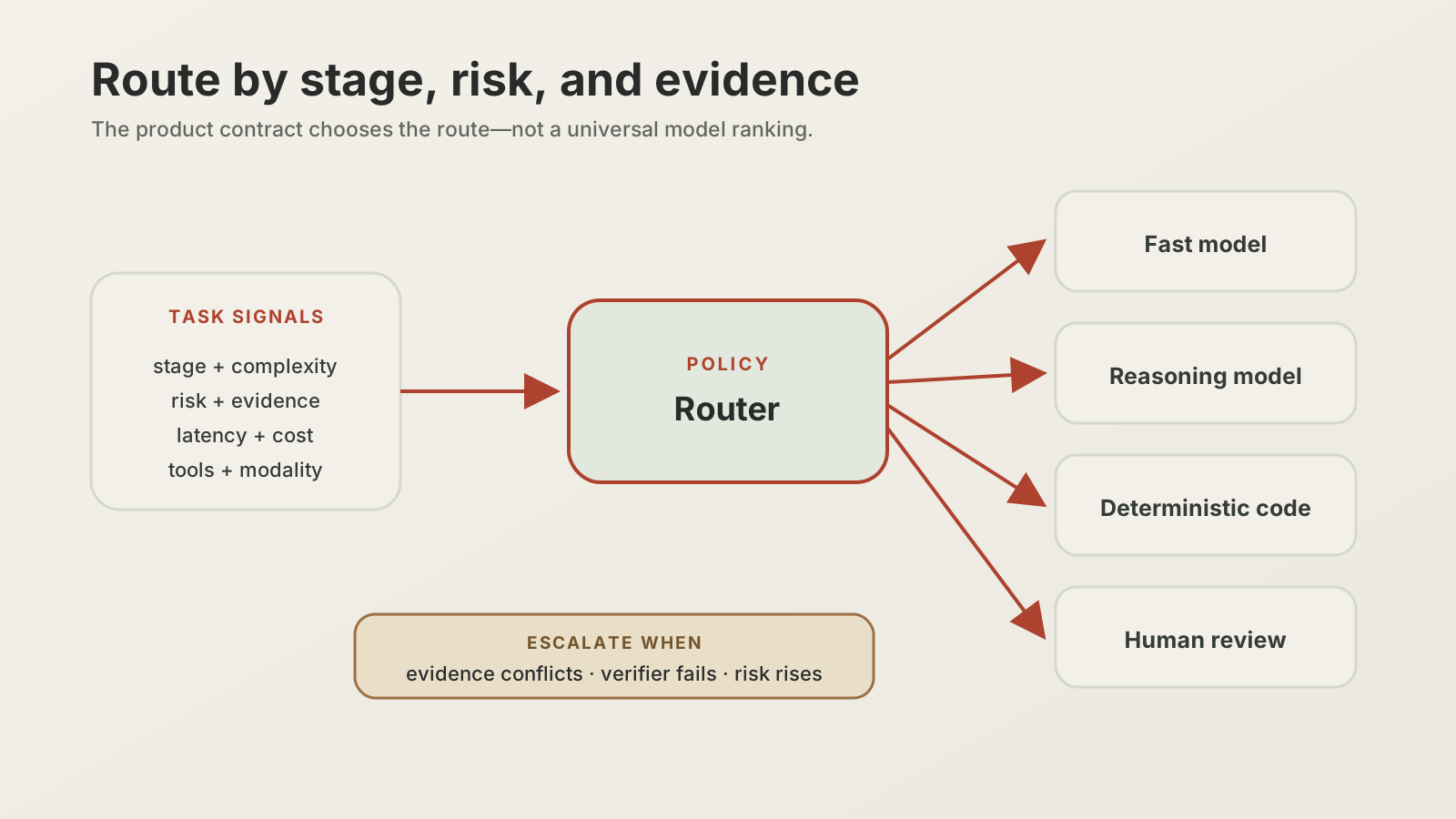
Choose models by task stage, risk, quality target, latency budget, and cost ceiling—and change routes only through evaluation.
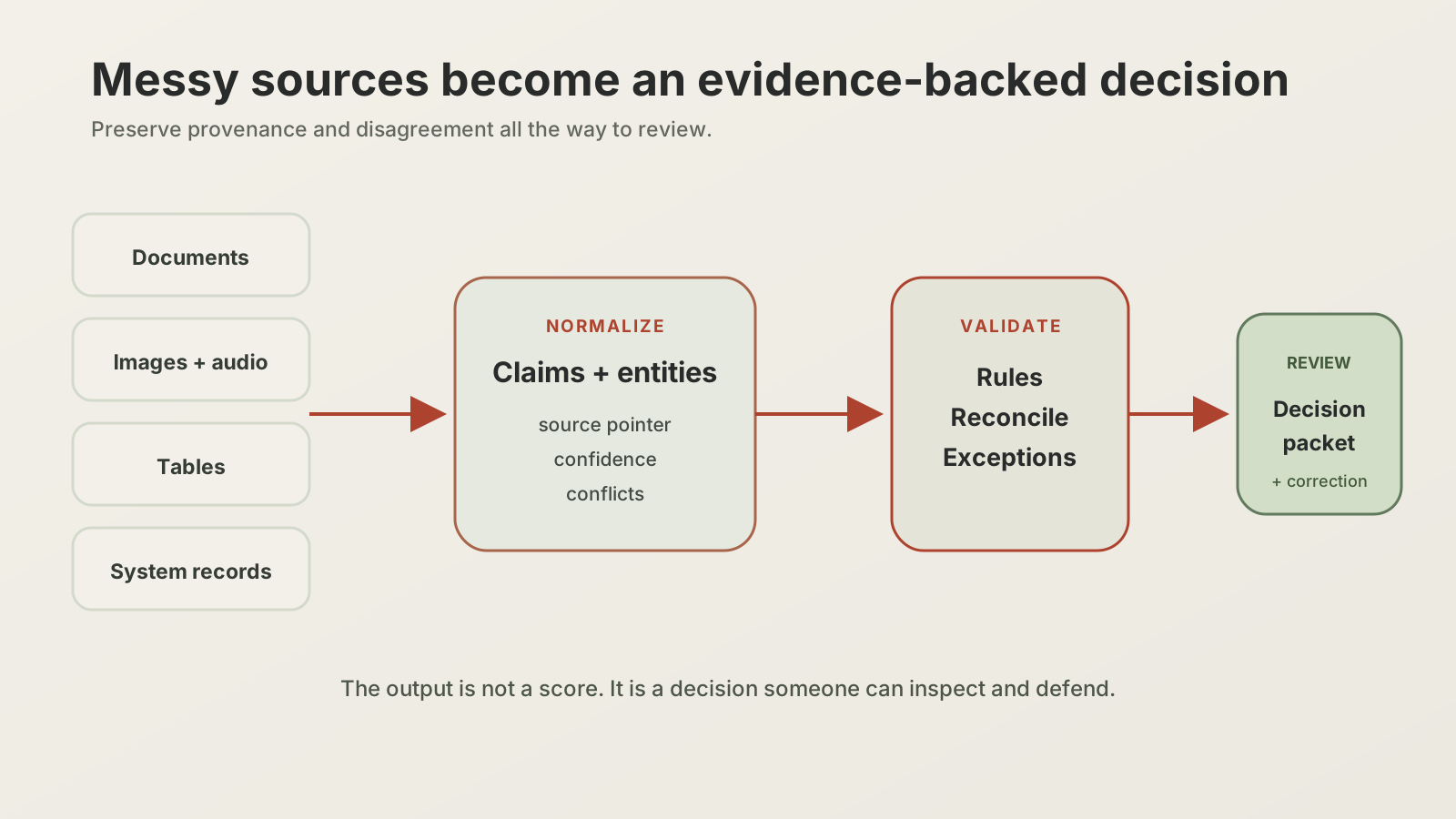
The valuable multimodal workflow turns documents, screenshots, tables, images, audio, and system records into an evidence-backed decision packet.
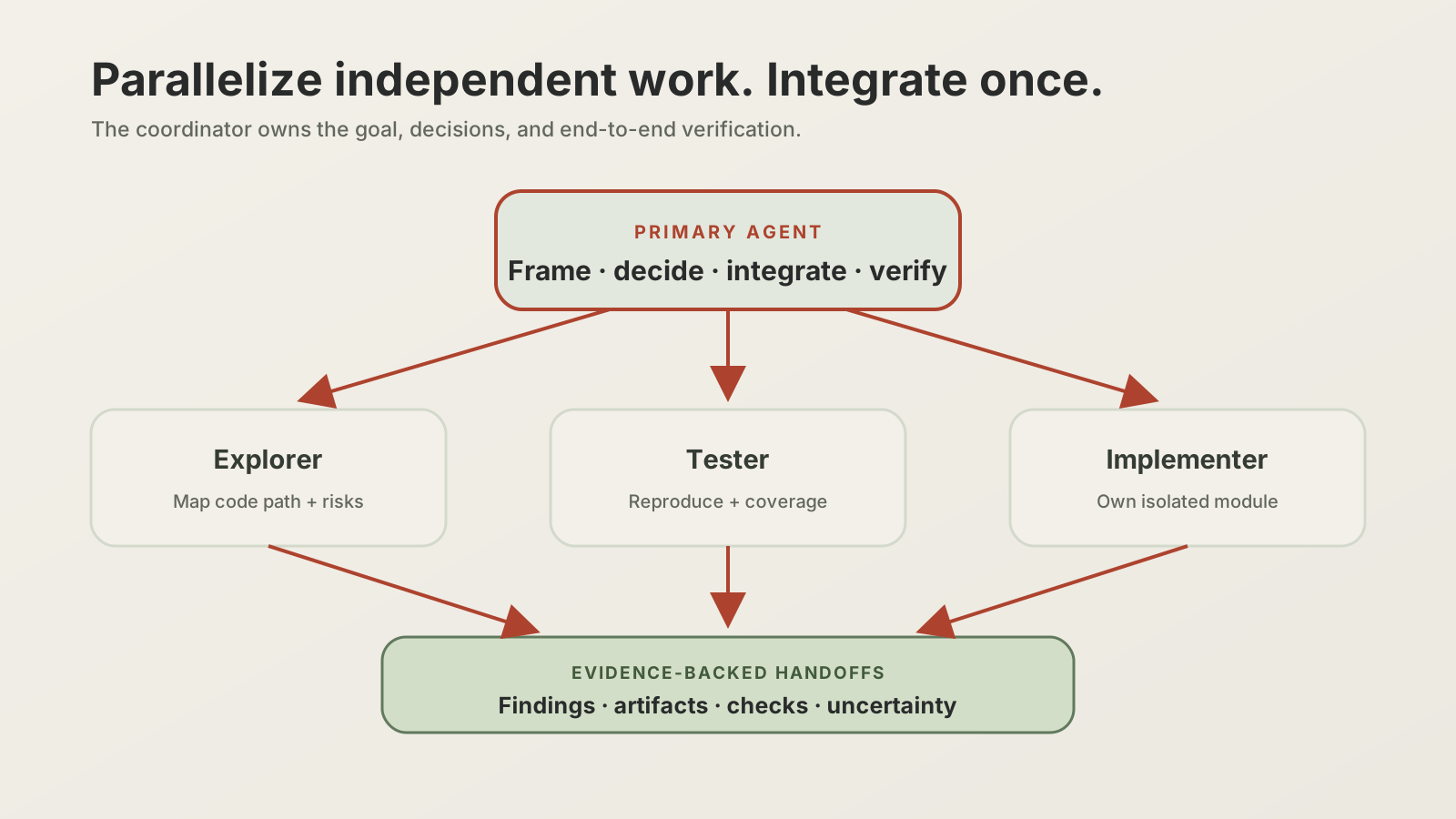
A field guide to deciding what should run in parallel, isolating writes, and designing handoffs that are cheaper to verify than to redo.
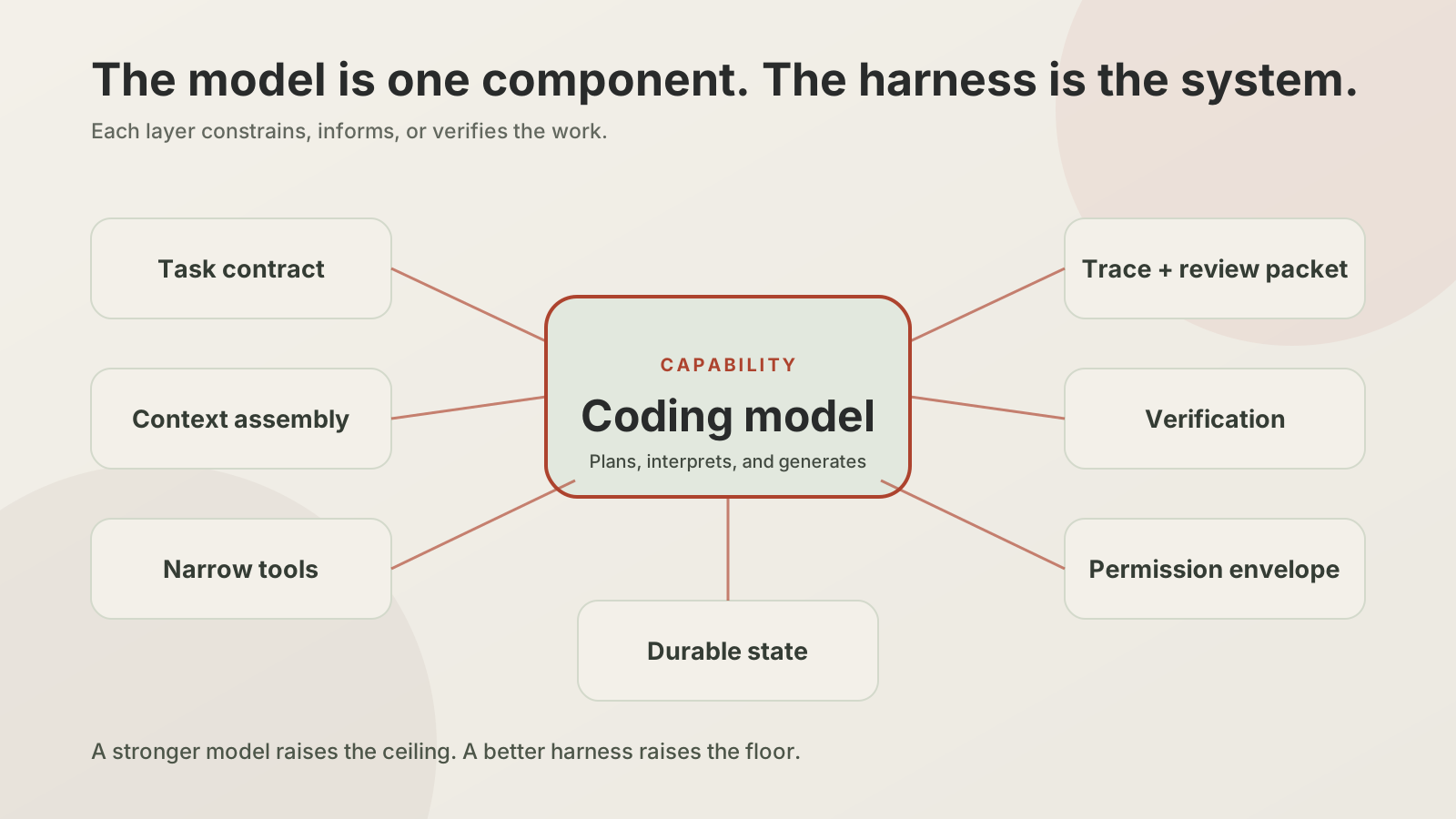
A production coding agent is the model plus everything that makes its work bounded, repeatable, testable, and safe.
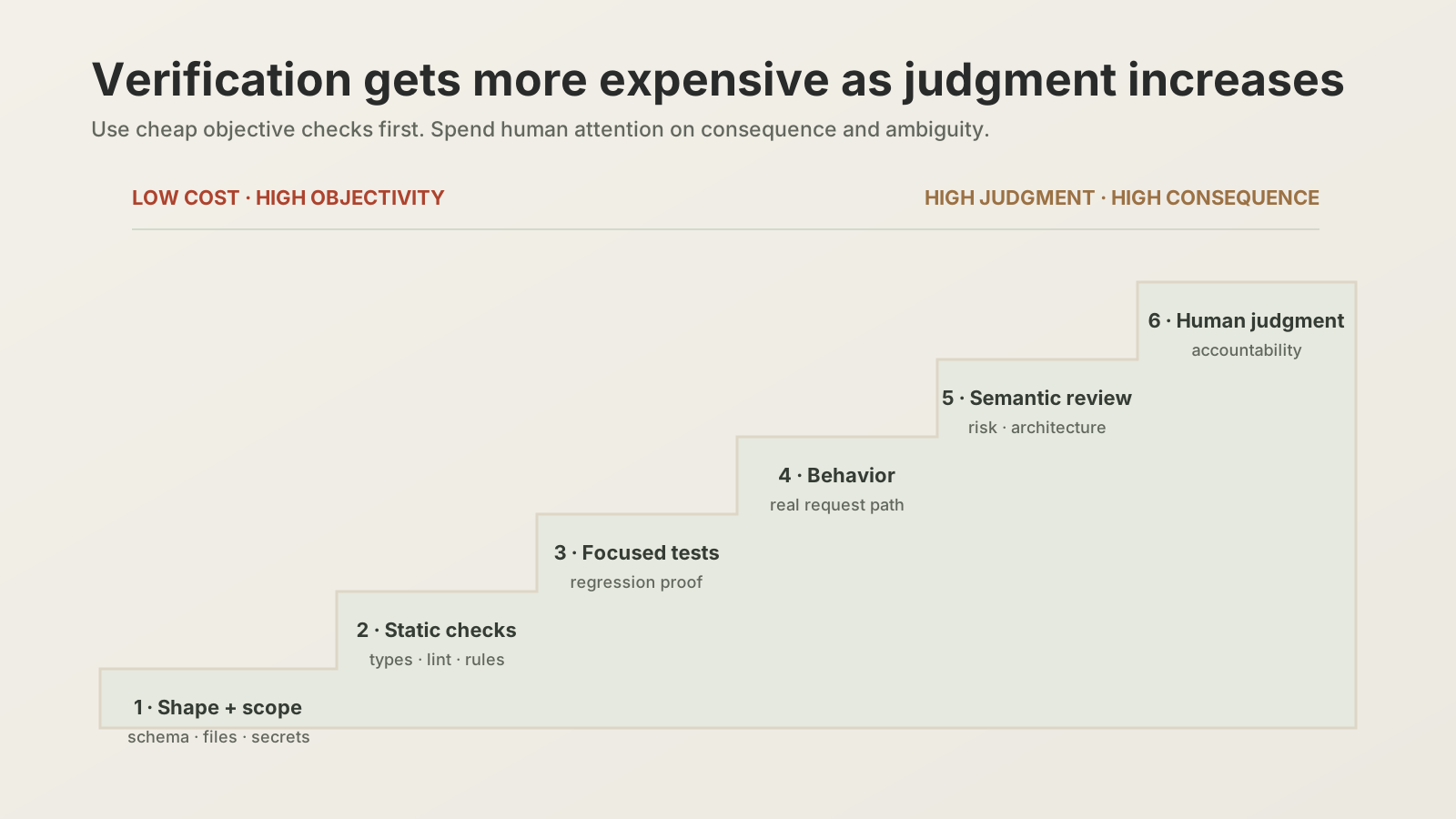
A practical validation stack for coding agents, from cheap deterministic checks to behavioral tests, graders, and human review.
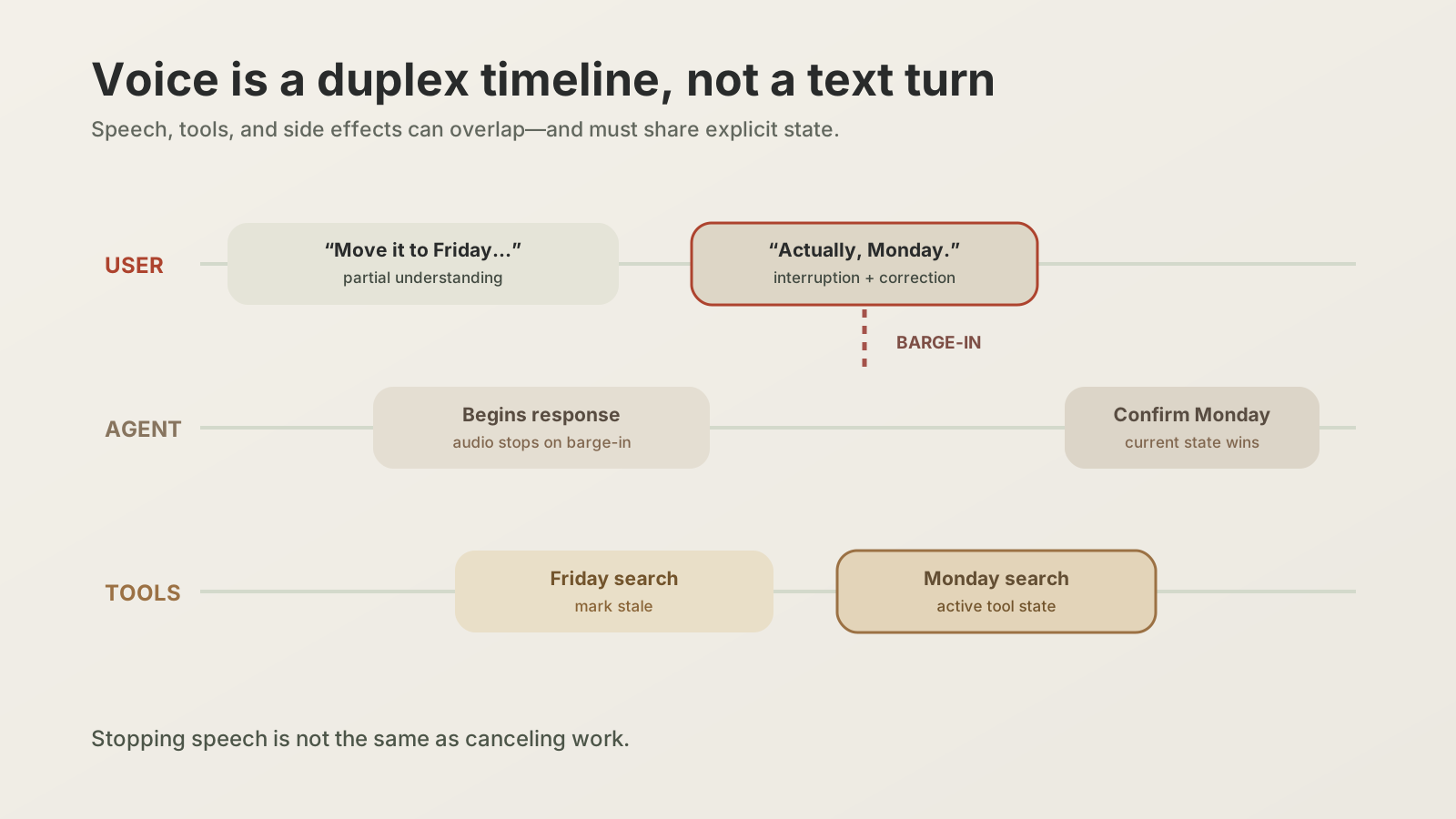
Reliable voice agents coordinate streaming audio, dialogue state, interruption, tool latency, confirmation, recovery, and conversational evaluation.
A concise guide to wrapping existing enterprise APIs so AI agents can discover and use them safely.
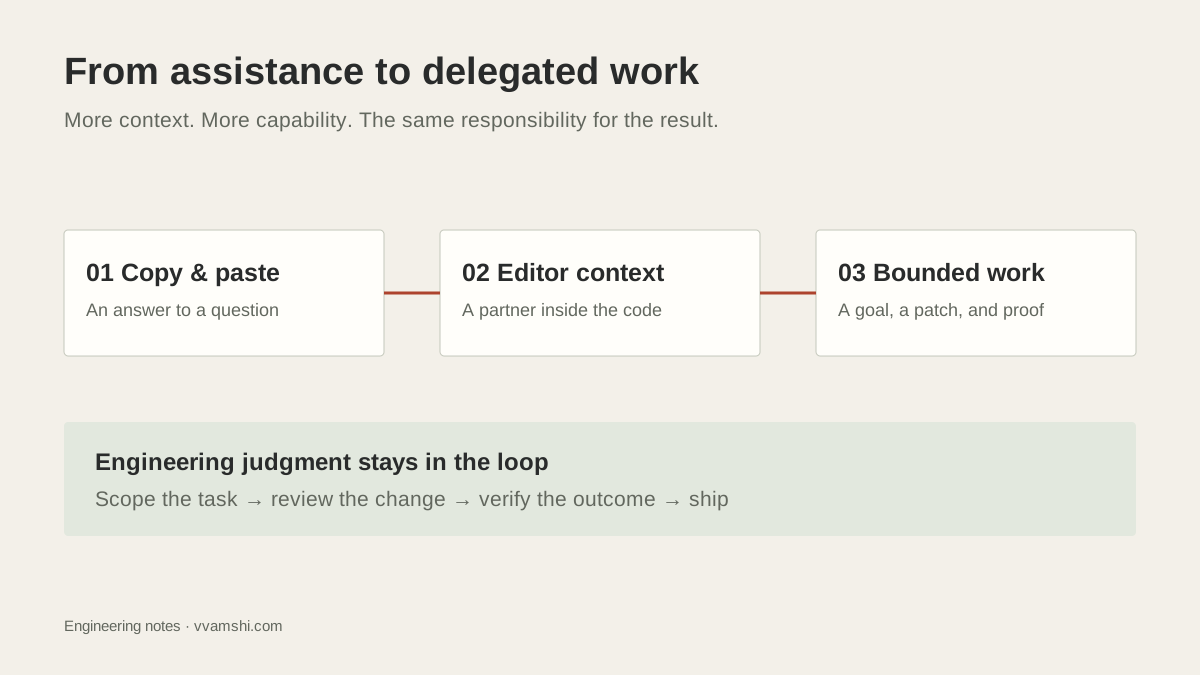
A short guide to using AI coding tools with senior-engineer judgment: scope, review, verify, and ship.
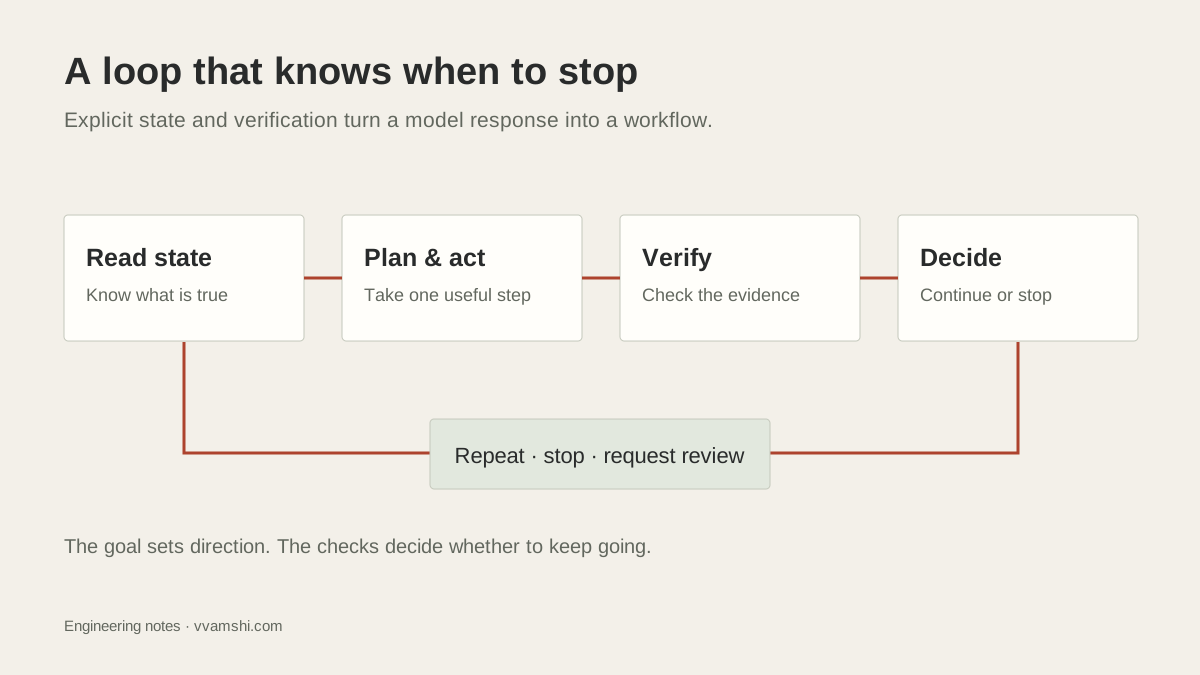
A practical way to design AI agent workflows with goals, state, verification, stop conditions, and human review.
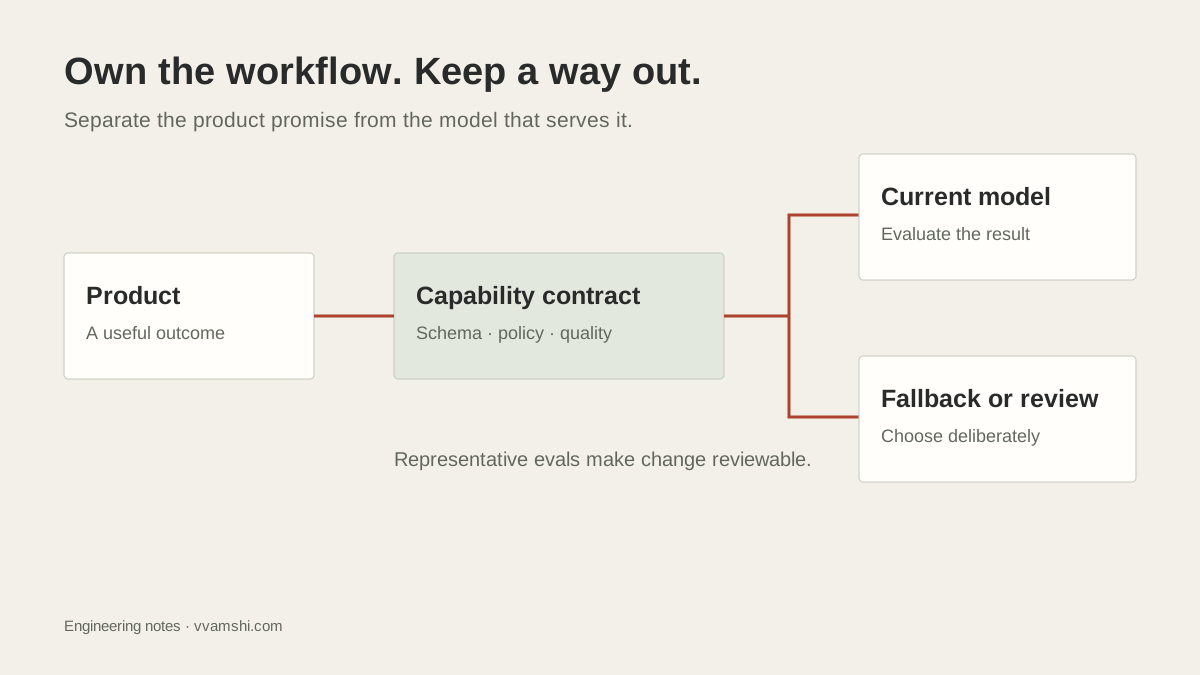
Design AI products so model changes, fallbacks, routing, pricing, and provider outages do not break the workflow.
Developer experience now has two readers: humans and coding agents. DevRel should design for both.
Why AI companies need builders close to customers: embed, ship, measure, learn, and productize.